How to Conduct Icebreaking Sessions: The Complete Guide
Picture this: You're sitting in yet another virtual meeting. Twenty faces stare back at you through tiny squares on your screen. Someone's mic is echoing. Another person forgot to unmute. And the energy? About as lively as a Monday morning before coffee.
Sound familiar? I've been there more times than I can count. And here's what I learned the hard way: the first five minutes of any meeting set the tone for everything that follows.
That's where icebreakers come in. But not the boring, cringe-worthy kind that make everyone groan. I'm talking about genuine, fun icebreaker activities that actually get people talking, laughing, and—dare I say—looking forward to your meetings.
Why Meeting Icebreakers Actually Matter for Team Building
Let me be straight with you. An icebreaker isn't just some gimmicky activity you throw in to kill time. It's a strategic tool to break down walls, create psychological safety, and help people connect as humans—not just as job titles on a Zoom call.
Think of it as the warm-up before a workout. You wouldn't jump straight into heavy lifting without stretching, right? Same principle. Icebreakers warm up your team's communication muscles before diving into the real work.
The best part? When done right, they transform awkward silence into genuine engagement. I've seen reserved team members who never speak up suddenly share stories that have the whole room laughing. That's the power of a well-executed icebreaker.
Why Meeting Icebreakers Actually Matter for Team Building
Here's something most managers don't realize: remote work and hybrid setups have killed casual conversations. No more coffee machine chats. No hallway hellos. Just meeting after meeting with barely any human connection.
Meeting icebreakers for work fill this gap. They create those micro-moments of connection that used to happen naturally. When Sarah from accounting shares her weekend hiking disaster, or when Mike admits he's secretly obsessed with reality TV, something magical happens. People become real to each other.
And real connections lead to better collaboration, more creative problem-solving, and teams that actually enjoy working together. I've seen productivity jump just because people felt comfortable enough to speak up in meetings.
Icebreakers for Meetings in Any Setting
Different situations call for different approaches. Let me break this down based on what actually works in the real world:
Meeting Icebreakers for Small Groups (5-10 People)
Small groups are perfect for deeper connections. You have time for everyone to participate, so go for icebreaker questions that spark real conversations.
My go-to quick icebreaker questions for small groups:
- "What's something you learned recently that surprised you?"
- "If you could have dinner with any fictional character, who would it be and why?"
- "What's your go-to productivity hack when you're feeling overwhelmed?"
- "Share a random work question of the day: What's the strangest job you've ever had?"
Pro tip: For small groups, try the "Have You Ever?" game. Someone says "Have you ever..." and anyone who has done it shares a quick story. It's simple, revealing, and surprisingly fun.
Meeting Icebreakers for Large Groups (20+ People)
Large groups need structure. You can't have 50 people each answer a thought-provoking question—you'd be there all day.
Instead, try these icebreaker games for business meetings:
- Would You Rather Questions: Split into breakout rooms and discuss. Works great for virtual meetings with 30+ people.
- Poll-Based Icebreakers: Use Zoom polls or chat reactions. "React with 👍 if you're a morning person, 👎 if you're a night owl."
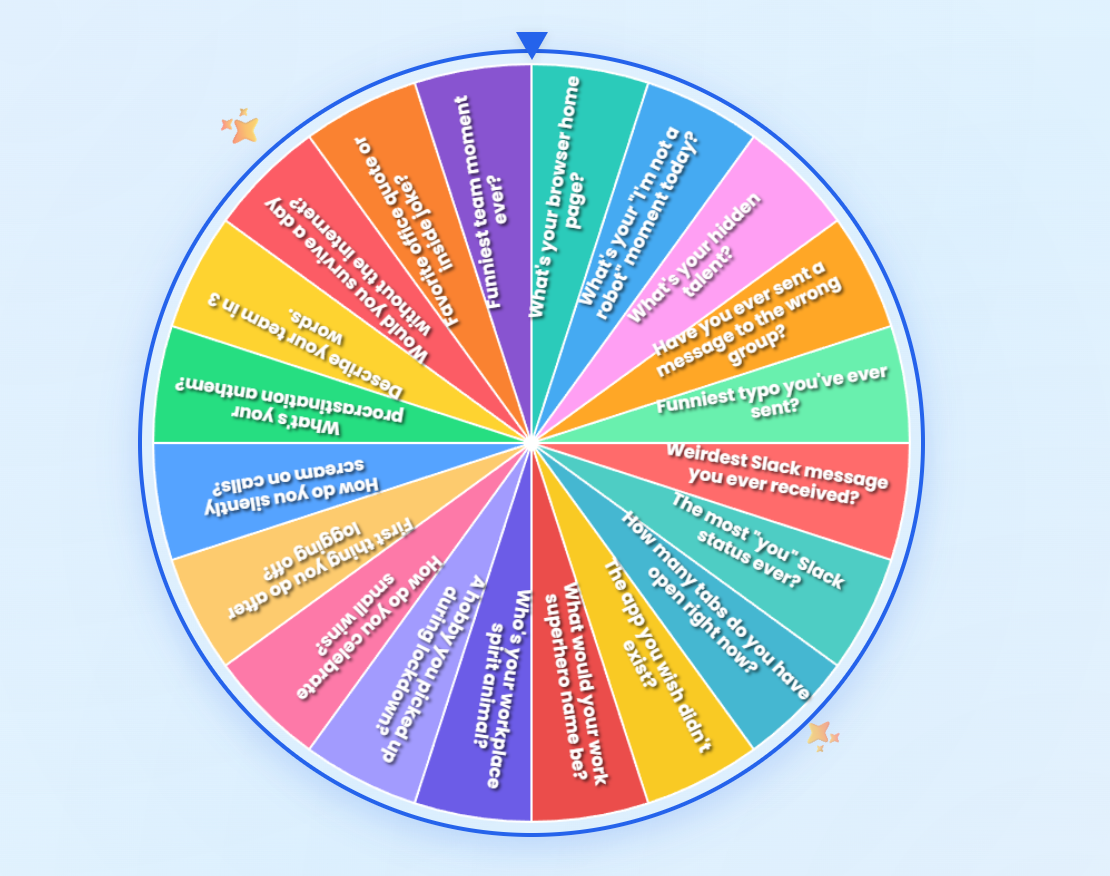
- Spin the Wheel: Use free online tools like Brizzlo to randomly select participants and questions. Everyone gets involved without putting anyone on the spot.
The key with large groups? Keep it fast-paced and visual. People's attention spans are short, especially on video calls.
Icebreakers for Virtual Meetings (The New Normal)
Virtual meetings are tricky. You're fighting against muted mics, turned-off cameras, and people multitasking on their phones. But here's the secret: icebreaker questions for virtual meetings need to be even MORE engaging than in-person ones.
My favorite icebreaker questions for online meetings:
- "Show us your favorite mug on camera right now—no prep!"
- "What's the weirdest thing within arm's reach of your desk?"
- "If your life was a movie, what would the title be?"
- "Share a fun fact about your hometown in the chat"
For holiday icebreaker questions for virtual meetings, try seasonal themes: "What's your most memorable holiday disaster?" or "What's one tradition from your childhood you still do?"
And don't sleep on fun icebreaker questions for virtual meetings during themed days. Fun Friday questions for work like "What's your weekend guilty pleasure?" get people excited for the break ahead.
Icebreakers for In-Person Meetings (Classic Team-Building Activity)
In-person meetings let you get creative with movement and interaction. Don't waste this opportunity by just sitting around a table!
Try these fun things to do in office meetings:
- Two Truths and a Lie: Classic but effective. People love trying to spot the lie.
- Human Bingo: Create bingo cards with traits like "has traveled to 5+ countries" or "speaks two languages." People mingle to find matches.
- Team Building Games Without Materials: Try rapid fire questions for employees while tossing a ball. Whoever catches it answers.
The beauty of in-person? You can read body language, create energy through movement, and build connections that video calls just can't replicate.
How to Actually Run an Icebreaker (Without Making It Awkward)
Okay, let's talk execution. I've bombed enough icebreakers to know what NOT to do. Here are my hard-won tips:
How Long Should an Icebreaker Be?
Keep it short. Seriously. 2-5 minutes max for most meetings. Think of it as an appetizer, not the main course.
For 5-minute team building activities for workplace indoors settings, one or two good questions are plenty. For 10 minute games for virtual meetings, you can do something more interactive like breakout room discussions or a quick spin-the-wheel session.
Remember: From icebreaker to completed agenda, you still have real work to do. Don't let the fun part eat up all your time.
Choosing the Right Icebreaker Questions
Not all icebreaker questions are created equal. Here's my framework:
For getting to know each other: Use light, personal questions. "What's your favorite way to spend a Saturday?" or "Coffee or tea—and how do you take it?"
For team icebreaker questions for virtual meetings: Go visual or chat-based. "Share a photo of your workspace" or "Drop an emoji that describes your mood today."
For thought provoking icebreaker questions: Save these for smaller groups or teams that know each other well. "What's a challenge you're facing right now?" or "What's one professional skill you wish you were better at?"
For funny icebreaker questions for adults: These are gold for Friday meetings or casual team catch-ups. "What's the most embarrassing song on your playlist?" or "What's the worst fashion trend you participated in?"
Fun Icebreaker Questions That Actually Work
Let me share my tested-and-approved collection. I've used these with everyone from C-suite executives to college interns, and they consistently get great responses:
Funny Icebreaker Questions for Colleagues:
- "What's the weirdest food you've ever eaten?"
- "If you could only eat one food for the rest of your life, what would it be?"
- "What's your most-used emoji and why?"
- "Share your most recent Google search—no context needed"
- "What's a skill you have that's completely useless but you're proud of?"
Would You Rather Icebreaker Questions for Work:
- "Would you rather work 4 days a week for 10 hours or 5 days for 8 hours?"
- "Would you rather have unlimited coffee or unlimited snacks at your desk?"
- "Would you rather attend meetings with your camera on or participate in a group presentation?"
- "Would you rather work from home permanently or have your own private office?"
Good Icebreaker Questions for Virtual Work Meetings:
- "What's your favorite thing about working remotely?"
- "Show us your work-from-home setup on camera"
- "What's one thing you miss about working in an office?"
- "Share a tip that helps you stay productive at home"
Fun Check-In Questions for Team Meetings:
- "On a scale of 1-10, how's your Monday going so far?"
- "What's one win you had this week, big or small?"
- "What's something you're looking forward to?"
- "Share one word that describes how you're feeling today"
Funny Questions to Ask Coworkers (With Answers Built In):
- "Pineapple on pizza—yes or absolutely not?"
- "Are you someone who makes their bed every day or embraces the chaos?"
- "Morning shower or evening shower—which camp are you in?"
- "Do you prefer working in complete silence or with background noise?"
Deep Icebreaker Questions for Team Connections:
- "What's a piece of advice that changed your life?"
- "Who's someone that influenced your career path?"
- "What's a goal you're working toward this year?"
- "What's something you're learning right now?"
Tips for Running Effective Icebreakers
After running hundreds of these, here's what separates good icebreakers from great ones:
Make participation optional: Never force anyone to answer. Some people need time to warm up. Say "Anyone want to jump in first?" instead of calling on people directly.
Go first: Model vulnerability. Share your own answer before asking others. It sets the tone and shows it's safe to be real.
Read the room: If energy is low, go with funny questions. If the team seems stressed, try supportive check-in questions. Flexibility beats rigid planning.
Use technology wisely: Tools like Brizzlo's spinning wheel, Zoom polls, or Slido make icebreakers interactive and fun. They also take the pressure off you to facilitate everything manually.
Keep it inclusive: Avoid questions about family, religion, politics, or anything too personal. Stick to work-appropriate topics that everyone can answer comfortably.
Interactive Icebreaker Games to Warm Up Your Team
Sometimes you need more than just questions. Here are my favorite icebreaker games for adults that require zero materials:
The Spin the Wheel Game: Use online tools to randomly pick questions and participants. Fair, fun, and keeps everyone on their toes. Perfect spin the wheel game ideas for work include category wheels (fun facts, weekend plans, work hacks) or rapid-fire rounds.
Quick Fire Round: Set a timer for 30 seconds. Each person shares as many answers as they can to a prompt like "Name items on your desk" or "Name coffee shop chains." It's energizing and gets people laughing.
Emoji Story: In the chat, everyone shares their weekend or week using only emojis. Others try to guess what happened. Works great for fun questions for virtual team meetings.
PowerPoint Presentation Icebreakers: Everyone gets 30 seconds to present on a random topic (use a spinner to choose). Topics like "Why cats are better than dogs" or "The proper way to make a sandwich" lead to hilarious improvised presentations.
Free Tools to Level Up Your Icebreakers
You don't need fancy paid software. Here are free icebreaker activities and resources I actually use:
Brizzlo: Free online spinning wheel with 50+ built-in icebreaker questions. No downloads, no sign-ups. Just spin and go. Perfect for all team sizes and meeting formats.
Zoom Features: Built-in polls, reactions, and breakout rooms are goldmines for interactive icebreaker games. Use them!
Google Forms: Create quick surveys for fun activities for work from home employees. "What's your spirit animal?" results make great conversation starters.
Random.org: Use it to randomly select who goes first or pick from a list of questions. Takes the awkwardness out of volunteering.
Quick Starters for Different Meeting Types
Monday Morning Kickoff: "Share one thing you're excited about this week" or fun Friday questions asked early like "What are you looking forward to this weekend?"
Project Team Meetings: "What's one challenge you're facing right now?" followed by quick team problem-solving.
All-Hands Meetings: Use polls or spin-the-wheel for quick engagement. With large groups, visual tools beat verbal rounds.
One-on-One Check-ins: Try deeper questions like "What's energizing you lately?" or "What's draining your energy?"
New Team Onboarding: Classic "get to know you questions" work best. Keep them light and fun to ease new hire nerves.
Common Icebreaker Mistakes to Avoid
Learn from my failures, friends:
Going too long: I once ran a 15-minute icebreaker for a 30-minute meeting. Rookie mistake. Keep it to 10-15% of your total meeting time, max.
Making it mandatory: Forced fun isn't fun. Some people need to observe before they participate. That's okay.
Using the same questions every week: Variety matters. Rotate through different types—funny, thoughtful, rapid-fire, visual.
Ignoring virtual participants: In hybrid meetings, remote folks often get left out. Use chat, polls, or screen-sharing tools to include everyone equally.
Skipping icebreakers entirely: "We don't have time" is code for "We don't value team connection." Even 90 seconds makes a difference.
The Real Impact: Why This Matters
Here's the truth: Icebreakers won't magically fix broken teams or replace real leadership. But they create space for the connections that make everything else work better.
I've watched teams transform from silent video calls to engaged collaborators, all because someone took two minutes to ask "What's the last thing that made you laugh out loud?"
In our increasingly digital, disconnected world, these small moments of human connection aren't nice-to-haves. They're essential.
So next time you're planning a meeting, don't skip the warm-up. Open Brizzlo, spin the wheel, ask a fun question, and watch what happens when people remember they're working with humans, not just usernames on a screen.
Your team—and your meeting attendance—will thank you.
← Back to Blog